
Tired of Tantrums? This Simple Toddler Routine Helps Fast
If you’re anything like me, parenting two young boys can feel like a nonstop whirlwind. My 3-year-old and 19-month-old seem to have boundless energy, and some days I feel like I’m just trying to survive the tantrum tornado. I used to think tantrums were just… normal. Part of life. Something I had to endure. But then I realized: a simple daily routine can actually change everything.
In this post, I’m sharing exactly what worked for my boys — a predictable, stress-reducing toddler routine — so that you can see fewer meltdowns, more cooperation, and even some sanity restored to your day.
Before I share exactly what worked for us, I created a set of simple toddler morning routine cards you can use at home. They’ve been a game-changer for helping my 3-year-old know what’s coming next.
Why a Toddler Routine Matters
I didn’t fully appreciate how important routines were until I started paying attention to my kids’ moods. My 3-year-old would get cranky, my 19-month-old would have sudden explosions over the tiniest things, and I’d feel like I was constantly putting out fires.
It turns out, toddlers thrive on predictability. They don’t have the words or the emotional skills yet to manage big feelings, so a consistent routine gives them a sense of security and control. When my boys know what’s coming next, I noticed an almost immediate drop in tantrums — because they’re not caught off guard or overwhelmed by transitions.
Here’s what research shows: consistent daily routines can improve toddlers’ behavior, sleep, and overall emotional regulation. That’s a huge win for both parents and kids.
How I Created a Simple Toddler Routine
I wanted something that was easy to follow, flexible enough for real life, and realistic with two kids under four. I started small, focusing on key points in the day that tend to trigger tantrums: morning, mealtimes, and bedtime.
Here’s a look at our routine:
1. Morning: Start Predictable
Mornings used to be the hardest part of my day. Getting both my 3-year-old and 19-month-old dressed, fed, and out the door felt like complete chaos most days. I realized pretty quickly that if I didn’t create some kind of structure first thing, the rest of the day would follow that same stressful tone.
What made the biggest difference for us? A simple, visual routine my kids could actually see and follow. I started using toddler morning routine cards with my 3-year-old, and it was a total game-changer. Instead of me constantly repeating directions, he could look at the cards and know exactly what comes next—which cut down on so many power struggles. If you want to try this at home, you can grab my free toddler morning routine cards and start using them right away.
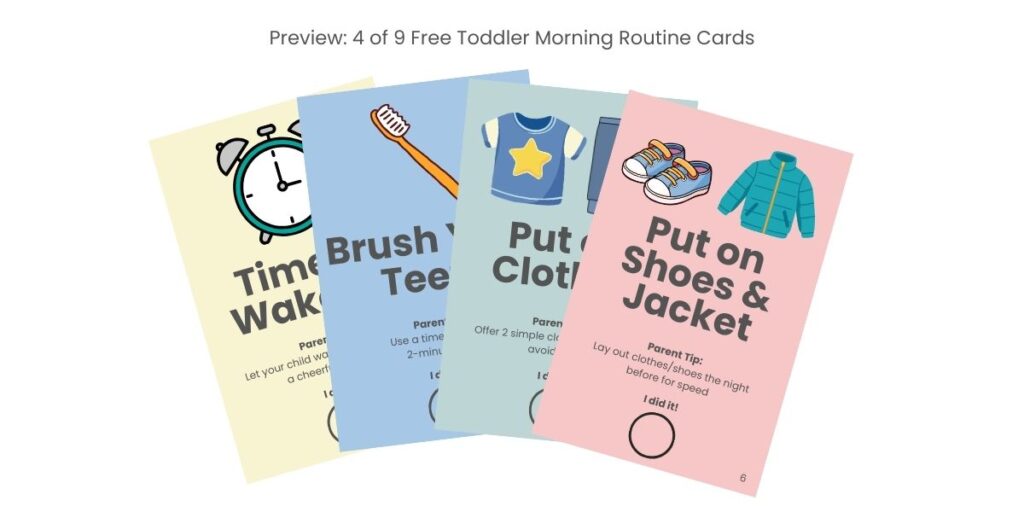
Here’s what our mornings look like now:
Clear transitions: I still use simple verbal cues like, “Five more minutes, then we clean up,” but now I’ll often tie it back to the routine (“After this, we’re heading out”). Even my 19-month-old is starting to catch on.
Wake-up window: I try to wake my boys around the same time every day. My 3-year-old is naturally an early riser, so we aim for 7:00 AM. Having a consistent start helps set the tone for everything else.
Follow the routine cards: After waking up, my 3-year-old goes through his routine using the cards—things like using the bathroom, getting dressed, and brushing teeth. He loves having that independence, and I love not having to remind him 10 times.
Breakfast and “morning choice time”: Once we’re through the basics, we sit down for breakfast. Afterward, I let each of them pick a small activity—coloring, blocks, or a quick puzzle. It gives them a sense of control while keeping things calm and contained.
2. Midday: Meals, Play, and Naps
This was where I noticed the most dramatic change. Before routines, lunchtime often ended in tears, and naptime could take hours of negotiating. Here’s what worked:
- Set meal and snack times: My boys eat at roughly the same time each day — breakfast at 7:30, lunch around 12, and snacks mid-morning and mid-afternoon. This keeps hangry meltdowns at bay.
- Playtime: After meals, we have a “play window.” I rotate activities between indoor play, outdoor time, or creative projects. My 3-year-old enjoys building with blocks, and my 19-month-old loves sensory play like water or sand tables.
- Nap/quiet time: My 19-month-old still naps in the afternoon, while my 3-year-old has a quiet time in his room. Even if he doesn’t sleep, this gives him a calm break — and it gives me a little breather too!
By keeping meals, play, and rest predictable, tantrums started happening less often. My boys felt safe, and I started feeling less like a short-order cook and more like a mom with a plan.
3. Evening: Wind Down Without Chaos
Evenings used to be unpredictable. My 3-year-old’s energy would spike right when I wanted to start dinner, and my 19-month-old would throw toys in protest. A calm evening routine changed everything:
- Dinner around the same time: We eat together at 5:30 PM. I involve my 3-year-old in small tasks like setting the table. My younger son loves stacking cups or carrying napkins. It keeps them engaged and cooperative.
- Bath and pajamas: After dinner, it’s bath time. I keep it consistent — bath, brush teeth, pajamas. My 3-year-old knows the steps, and my 19-month-old follows along by watching him.
- Storytime: Before bed, I read two stories to both boys. This predictable end-of-day signal helps them transition into sleep more easily.
- Bedtime: Lights out is at 7:30 PM. I keep the same phrases each night — “Goodnight, love you, see you in the morning.” Consistency is key.
Even on chaotic days, sticking to this evening rhythm dramatically reduced tantrums and bedtime battles.
Tips for Making Toddler Routines Work
Here’s what I learned while implementing our routine:
- Start small: You don’t need a minute-by-minute schedule. Pick the biggest stress points — usually morning, meals, and bedtime.
- Use visual cues: Toddlers respond well to visual routines. I made a simple picture chart for my 3-year-old, and it’s a lifesaver for transitions.
- Be flexible: Life happens. Sometimes naps get skipped or errands run long. A routine is a guide, not a strict rulebook.
- Involve your toddler: Giving your kids small choices (“Do you want to brush your teeth first or put on pajamas first?”) helps them feel in control and reduces power struggles.
- Stay consistent: Even when it’s tempting to skip steps, consistency is what builds trust and security. Over time, you’ll notice fewer meltdowns.
Real-Life Results
After a few weeks of sticking to a simple routine, the change was noticeable. My 3-year-old is more cooperative with transitions, and my 19-month-old has fewer sudden explosions. Mornings feel manageable, meals are calmer, and bedtime is no longer a battlefield.
I still have tough days — toddlers are toddlers, after all — but having a predictable rhythm has given me both relief and confidence. I feel less reactive and more proactive as a parent, and my boys feel secure and supported.
Why It Works
The reason this simple toddler routine works so well is rooted in predictability, consistency, and autonomy. Toddlers feel safe when they know what to expect, and routines teach them how to manage their feelings. By giving them small choices, they learn independence while still following necessary boundaries.
Plus, a routine benefits parents too. When you know what’s coming next, your stress drops, and you can enjoy the moments with your kids instead of constantly putting out fires.
Final Thoughts
If you’re exhausted by tantrums, give a simple daily routine a try. Start with mornings, meals, and bedtime, and adjust it to fit your family’s real life. Your toddlers will feel more secure, and you’ll feel like you’ve finally found a little more order in the chaos.
Remember: it doesn’t have to be perfect. It just needs to be predictable, consistent, and flexible enough to survive life with little kids.
If you’re ready to make mornings easier right away, I also created a set of free toddler morning routine cards that you can print and use at home. They’ve made a huge difference for my 3-year-old by helping him actually see what comes next instead of me constantly repeating instructions—and it has cut down so many of our morning power struggles.
So if you’re tired of tantrums, start small, stay consistent, and let simple routines do the heavy lifting. You might be surprised how quickly things start to feel calmer.
If you’ve read some of my other toddler routine posts, you know this is something I talk about a lot because it has truly changed daily life with my 3-year-old and 19-month-old. Whether it’s bedtime, getting out the door in the morning, or just creating a simple daily rhythm, everything feels so much easier when there’s a predictable flow to the day. I’ve shared more about what works for us when it comes to a smoother bedtime routine, a chaos-free morning exit, and building a simple daily routine that actually works for real life with toddlers. They all connect back to the same thing I keep learning over and over again—when my kids know what to expect, they feel more secure, and I feel a lot less like I’m constantly putting out fires.