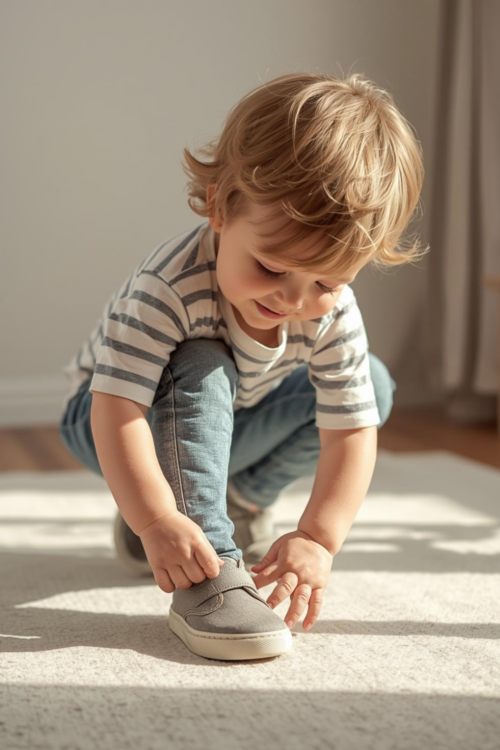
How to Get Your 3-Year-Old Out the Door Without Chaos
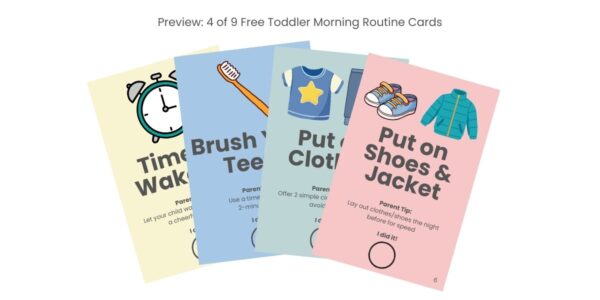
To make mornings calmer and easier, I created free printable routine flash cards that show each step of your toddler’s morning with simple visuals — just enter your email below to download them.
If you have a three-year-old, you already know how unpredictable mornings can feel. One minute they’re happily building with blocks, the next minute they’re crying because you put on the “wrong” socks.
I used to think mornings required strict schedules with every minute planned. But that only made me more stressed. What actually works in our house is a simple, predictable flow to the morning—not a rigid timetable.
Once I started following a routine that made sense for my three-year-old, getting ready felt smoother, transitions got easier, and honestly… our mornings felt calmer.
Here’s how we get out the door with less chaos, along with tips, troubleshooting ideas, and ways to adapt it for your family.
Why a Morning Routine Matters
At three years old, kids are learning independence but still crave predictability. When mornings feel random, they often show it through whining, power struggles, or delays.
I noticed that when my child knew what was coming next, everything moved faster and with fewer tears. A good morning routine helps toddlers:
- Feel safe and secure
- Handle transitions better
- Reduce tantrums
- Learn independence
- Start the day calm
The key isn’t perfection—it’s consistency.
Prep the Night Before
I used to think mornings were all about rushing. But I’ve learned that preparing the night before saves so much stress.
Now I lay out clothes, shoes, and jackets, and I pack backpacks or bags ahead of time. One morning I forgot, and we spent 15 minutes hunting for a missing sock. That day taught me never to skip evening prep again.
I also prepare breakfast as much as I can—like setting out cereal bowls or pre-cut fruit. My child eats faster and stays more cooperative when things are ready to go.
Pro tip: If mornings feel hectic, check out my post on toddler meals for real-life breakfast ideas that work for low-stress mornings.
Keep a Simple, Predictable Flow
Our morning routine isn’t rigid. It’s a flow that usually looks like this:
- Wake up
- Potty and get dressed
- Breakfast together
- Brush teeth
- Put on shoes
- Grab backpack and leave
I narrate each step sometimes: “First shoes, then backpack, then outside.” It helps my child anticipate what’s next and reduces arguments.
Pro tip: For a full step-by-step guide to our simple daily routine, check out my daily routine guide.
Give Small, Manageable Choices
I’ve learned that toddlers feel empowered when they can make small choices. Big decisions, like “What do you want to wear today?” can overwhelm them.
Now I ask simple options: “Red shirt or blue shirt?” or “Apple slices or banana?” Even when leaving the house, I offer small choices: “Do you want to carry your backpack or your toy?”
Pro tip: For low-stim entertainment during morning transitions, see my post on low-stim shows.
Use Timers, Warnings, and Visual Cues
I never thought I’d rely on a timer for a toddler, but it works wonders. I set a timer for brushing teeth or putting on shoes and give simple warnings: “Five more minutes, then shoes on.” It turns stressful transitions into clear, manageable steps and gives my child a sense of what’s coming next.
I also use visual cues to make routines easier to follow. Sticker charts, hourglasses, or simple pictures of each step help my toddler see what comes next without constant reminders. One morning, brushing teeth became a game with a two-minute sand timer—and my child actually raced to finish without me having to nag.
Keep Calm (Even When It’s Hard)
I won’t lie—sometimes mornings test my patience. But I’ve learned that my frustration only makes chaos worse. Staying calm and modeling patience often helps my child mirror that energy.
Remember: toddlers aren’t being difficult on purpose—they’re just tired, hungry, or excited.
Make Mornings Fun
I’ve found that a little playfulness goes a long way. Singing a silly song, racing to the door, or offering a sticker reward can motivate a toddler.
If you have multiple kids, mornings can be even trickier. I’ve learned the hard way—check out my post on parenting two toddlers for tips on managing sibling dynamics.
Allow Extra Time When Possible
Even with a routine, some mornings are chaotic. Leaving an extra 10 minutes in your schedule makes a huge difference. It allows you to handle small hiccups—spilled cereal, missing shoes, or last-minute potty trips—without feeling rushed.
Troubleshooting Common Morning Challenges
Even with routines, toddlers push boundaries. Here’s what I’ve learned:
- Skipping breakfast or snacks: Keep meals simple and predictable. Offer small choices.
- Tantrums: Give warnings before transitions: “Two more minutes, then shoes on.”
- Refusing to get dressed or brush teeth: Use playful timers or make it a game.
- Busy mornings: Prep outfits, shoes, and backpacks the night before.
Why This Routine Works
A predictable morning isn’t just for toddlers—it helps the whole family. Once we had a flow, I felt less stressed, and my child seemed calmer too.
What I learned:
- Order matters more than exact times.
- Predictability = fewer meltdowns.
- Flexibility is essential. Life happens, and routines survive small disruptions.
- Even short routines have a big impact.
Extra Tips for Parents
- Stay flexible: Some mornings won’t go as planned—and that’s okay.
- Celebrate wins: Even smooth transitions deserve a high-five.
- Include children in planning: Let them help choose meals or snacks.
- Mix independent and interactive time: Toddlers need both.
- Use routines for teaching: Kids learn self-help skills when routines are consistent.
Final Thoughts
Getting out the door with a three-year-old doesn’t have to feel impossible. With predictability, small choices, visual cues, calm energy, and a little fun, mornings become smoother for everyone.
Remember, it’s not about perfection—consistency, predictability, and flexibility are what actually work.
Don’t forget! Grab your free toddler morning routine cards and make mornings calmer, smoother, and more predictable.