
Simple Daily Routine for a 3-Year-Old (That Actually Works)
If you have a three-year-old, you already know how unpredictable the days can feel. One minute they’re happily building a tower, the next minute they’re melting down because you peeled their banana the “wrong” way.
I used to think routines had to be rigid schedules with every minute planned. But with a toddler, that just made me more stressed. What actually works in our house is a simple, predictable flow to the day — not a strict schedule.
Once I started following a routine that made sense for my three-year-old, tantrums decreased, transitions got easier, and honestly… our whole house felt calmer.
Here’s the simple daily routine that works for us, along with tips, troubleshooting ideas, and ways to adapt it for your family.
Why 3-Year-Olds Need a Routine
At three years old, kids are learning independence but still crave predictability. When the day feels random, they often show it through whining, power struggles, or meltdowns.
I noticed that when my child knew what was coming next, everything went smoother. A good routine helps toddlers:
- Feel safe and secure
- Handle transitions better
- Reduce tantrums
- Learn independence
- Sleep better
The key is consistency, not perfection.
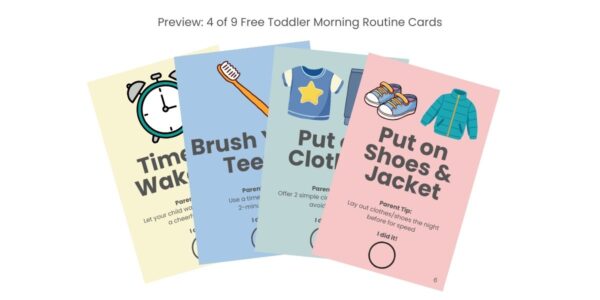
If you’re trying to build more structure into your day, I also created free toddler morning routine cards that you can print and use at home. They’ve helped us stay consistent and make mornings so much easier.
Our Simple Daily Routine for a 3-Year-Old
This routine isn’t strict by the minute. I think of it more as a rhythm to the day, flexible enough to adjust for appointments, weather, or just life.
Morning (7:00–9:00 AM)
Our mornings start slow. When my toddler wakes up, I try to keep the first part of the day calm and predictable.
Our morning routine usually looks like this:
- Wake up
- Potty and get dressed
- Breakfast together
- Brush teeth
- Free play
I’ve learned that rushing a three-year-old first thing in the morning almost always leads to tears. Giving them a little time to wake up and play makes the whole day start better.
If your mornings feel chaotic or stressful, I walk through exactly how we handle it in my post on How to Get Your 3-Year-Old Out the Door Without Chaos—including the simple steps and structure that helped us get out the door with less stress (and a lot fewer meltdowns).
If mornings feel chaotic for you, you might also love my free toddler morning routine cards. They’re a simple visual tool that helps guide your child step-by-step through the morning, making routines easier and reducing stress for everyone.
Pro tip: If mornings feel chaotic, I set up a small morning basket of toys or books my toddler can play with independently. It keeps them occupied while I get breakfast ready.
Mid-Morning Activity (9:00–11:30 AM)
This is when my toddler has the most energy, so I try to plan something active.
Some of our go-to activities are:
- Playing outside in the yard or at the playground
- Running errands (I let my toddler “help” by carrying a small basket or picking items)
- Library story time
- Sensory play at home (water table, play dough, or rice bins)
- Craft projects like painting or sticker activities
Getting outside in the morning is a game changer. On the days we skip it, I can definitely tell—the crankiness shows up faster.
If going outside isn’t possible, I rely on indoor activities for toddlers to keep my child engaged and burn off energy.
Lunch & Quiet Time (11:30 AM–2:00 PM)
Around 11:30, we start winding down for lunch.
Our routine looks like:
- Lunch
- Clean up toys
- Potty
- Nap or quiet time
Not every three-year-old naps, and that’s okay. If my child doesn’t sleep, we still do quiet time in their room with books or soft toys. It gives everyone a much-needed reset.
Mealtime tip: Figuring out meals can be stressful. I’ve learned what my toddlers actually eat in a day—even on nights they refuse dinner. Check out what my toddlers actually eat in a day for real-life ideas.
Afternoon Play (2:00–5:00 PM)
After quiet time, my toddler usually wakes up hungry and ready to play again.
Our afternoons are flexible but usually include:
- Snack
- Free play or imaginative play
- Crafts or sensory activities
- Outdoor time if the weather allows
This is also when I try to get small chores done while my toddler “helps.” It slows things down sometimes, but they love feeling involved.
Pro tip: If siblings are close in age, transitions can be tricky. I learned the hard way—read more in the hard truth about parenting two toddlers close in age.
Evening Routine (5:00–7:30 PM)
Evenings go best when they’re predictable. Our typical routine is:
- Dinner
- Family time
- Bath
- Pajamas
- Books
- Bedtime
Our bedtime routine is one of the most important parts of the day. Following the same simple steps each night helps my toddler know it’s time to calm down and get ready for sleep.
If you want a more detailed breakdown of what our bedtime looks like, I share the full routine in my post on Easy 3-Year-Old Bedtime Routine for Better Sleep—including exactly how we wind down and what makes bedtime smoother in our house.
Tip: Even if bedtime happens a little later than planned, keeping the sequence the same helps reinforce the routine.
Troubleshooting Common Toddler Challenges
Even with a routine, three-year-olds push boundaries. Here’s what I’ve learned:
- Skipping naps – Quiet time is still non-negotiable. Let your toddler rest with books or soft toys.
- Tantrums – Give a warning before transitions: “Five more minutes, then clean up for lunch.”
- Refusing meals – Keep meals simple and consistent. Offer choices when possible.
- Fighting over toys – Encourage sharing, but also give each child a few “special” toys they don’t have to share.
- Busy mornings – Prep breakfast or outfits the night before to reduce stress.
Why This Routine Actually Works
The routine isn’t really for the toddler—it’s for the whole family. Once our days had a rhythm, I felt less overwhelmed, and my child seemed calmer too.
What I learned:
- Order matters more than exact times
- Predictability = fewer meltdowns
- Flexibility is essential
- Even short routines can have a big impact
Extra Tips for Parents
- Stay flexible: Some days, things fall apart. That’s normal.
- Celebrate wins: Even small successes deserve recognition.
- Include children in planning: Let them help choose activities or meals.
- Mix independent and interactive time: Toddlers need both.
- Use routines for teaching: Consistency builds independence.
Final Thoughts
A simple daily routine doesn’t have to be complicated. Predictability, gentle guidance, and small pockets of calm are what make the biggest difference.
With this routine, mornings feel calmer, transitions are smoother, and both toddlers and parents get a little more peace in their day.
If you want help making mornings even easier, don’t forget to grab my free toddler morning routine cards—they’ve made a huge difference in our home and might help yours too.
Remember, perfection isn’t the goal—consistency, predictability, and a little flexibility are what actually work.